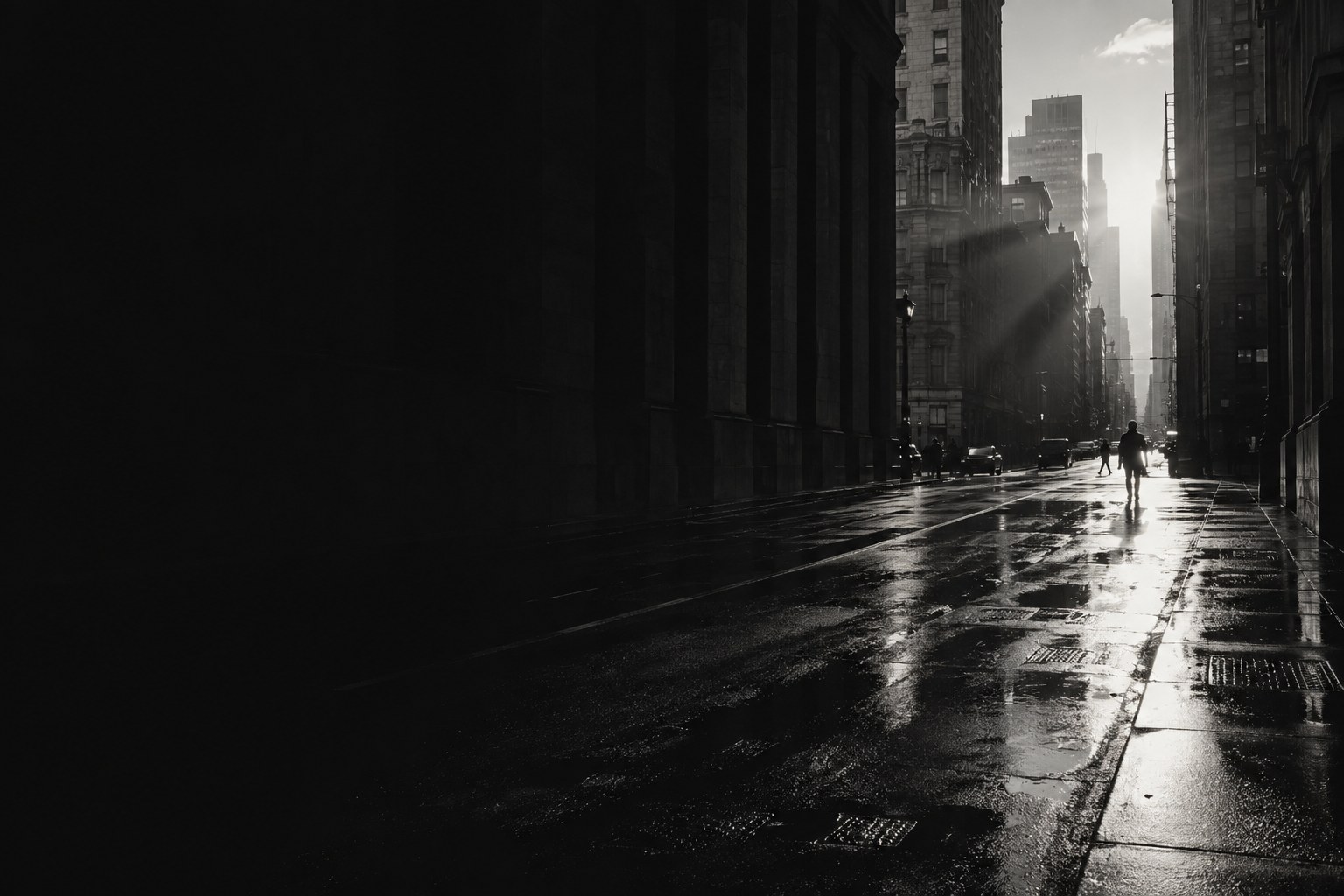
Creative direction means making decisions that belong together. The image, the words, the edit, the page. Someone has to know what they’re all trying to say.
That’s the part I enjoy. A photograph, a video, and a website have different jobs, but they can carry the same idea. My job is to make that idea clear enough for a team to build on.
Start with something you can explain
A direction needs more than a collection of things that look good together. If I can’t describe what connects them, I have more thinking to do. A reference should help explain a decision.
Consider a simple example. A project might need to make a complicated subject feel approachable. That could affect the language, the distance of the camera, the pace of the edit, and how much information appears on a page at once.
The purpose gives those choices something to answer to. Without it, a review can turn into a series of preferences with no useful way to choose between them. You can spend a long time moving things around without knowing whether the work is getting better.
Taste needs to become useful
Being able to recognize a strong result is only part of the job. Other people need to understand what you see and what you’re asking them to change. A vague feeling has to become a clear observation.
If a sequence feels rushed, identify where it stops giving the viewer time to understand. If a page feels small, look at the scale, the image crop, and the spaces that are doing nothing. If an identity feels inconsistent, find the choices that disagree.
That’s the kind of feedback I value. It gives someone a problem they can work on while leaving room for their own judgment. Being specific makes collaboration easier.
The team needs an idea it can use
A direction becomes stronger when people can contribute to it. A photographer might see a better relationship between the subject and the space. A designer might find a simpler way to organize the information.
The goal is to make those contributions possible without turning the project into several unrelated ideas. That takes clarity about what’s essential and flexibility about how it gets made. A detail can change while the purpose stays intact.
It also takes listening. If several people are struggling with the same instruction, I want to understand what’s unclear about it. Repeating the direction more firmly is rarely as useful as explaining it better.
Follow the idea into its final setting
Work is often reviewed somewhere more comfortable than the place it will be used. A large monitor gives an image plenty of room. A presentation gives you time to explain a concept before anyone has to make sense of it alone.
The final setting may offer neither of those advantages. A person might see the work on a phone, in passing, or without sound. A website visitor may arrive on a page in the middle of the story.
Creative direction includes caring about those conditions. The idea needs to survive contact with the person it was made for. A beautiful presentation is useful when the finished experience can carry the same thought.
Knowing when the work is there
There’s a point where another change adds activity without adding meaning. I want to get better at recognizing it. Continuing to adjust something can feel productive even when the direction is already clear.
A useful review returns to the purpose. Is the important thing easy to understand? Do the choices support it, and does the work give people a reason to care?
Those questions matter to me across photography, video, website design, and brand design. They also explain why my practice keeps moving between disciplines. I like making the individual pieces, and I like thinking about the relationships that make them belong together.
That’s my version of creative direction. Have a point of view. Explain it clearly. Give good people room to make it better.
All six notes ↗